



|
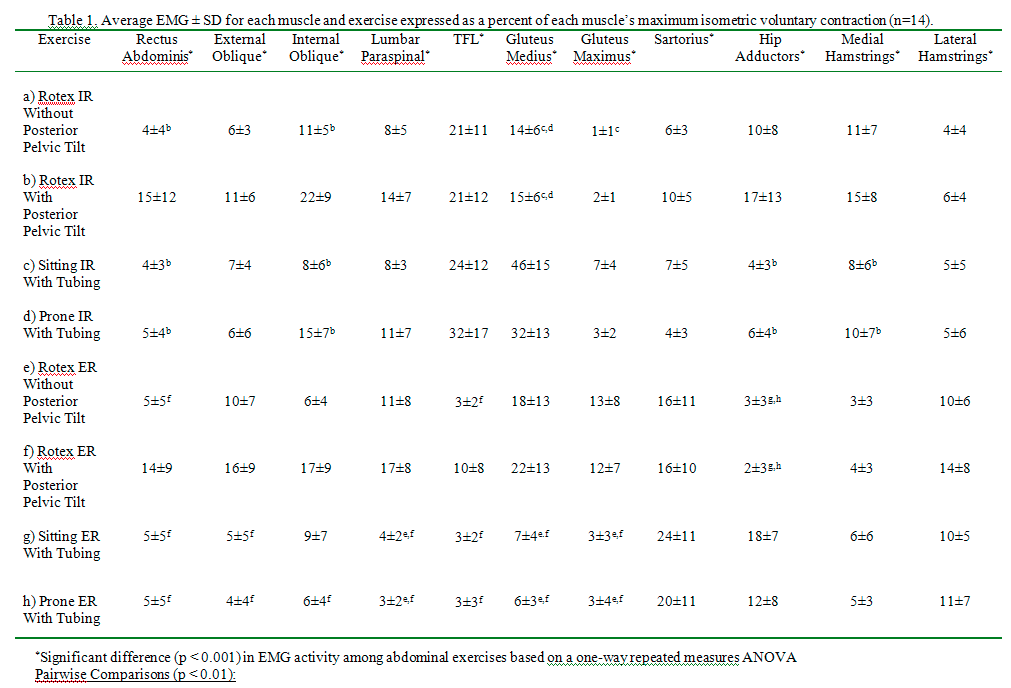
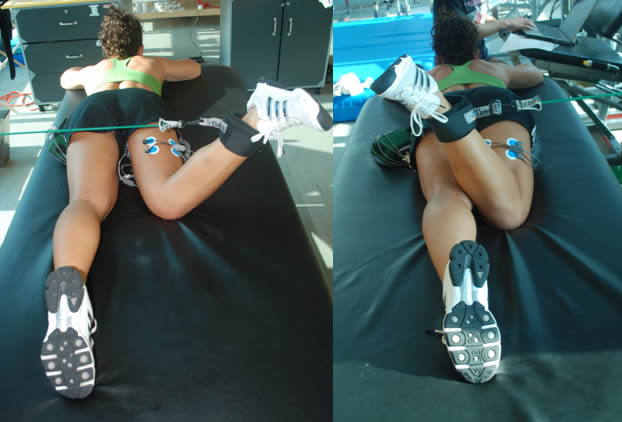
Core and Hip Muscle Recruitment Pattern Between the Rotex Device and Common Hip Rotation Rehabilitation Exercises FINAL REPORT Research Report Prepared for Blu Sky Solutions, LLC Research Conducted by: Rafael F. Escamilla, Ph.D., P.T., C.S.C.S., F.A.C.S.M. ABSTRACT Study Design: Controlled laboratory study using a repeated-measures, counterbalanced design. Objectives: To test the ability of the Rotex Device and tubing exercises to recruit core and hip musculature while performing hip internal rotation (IR) and external rotation (ER) movements. Background: Numerous hip exercises are employed during hip rehabilitation, but it is currently unknown how hip IR and ER exercises commonly used in hip rehabilitation compare to performing hip IR and ER movements using the Rotex device with respect to the recruitment of core and hip musculature. Methods: A convenience sample of 14 subjects performed 3 dynamic repetitions as well as 5 sec isometric contractions during hip IR and ER using the Rotex device in a closed chain standing position (Figure 1) and elastic tubing in an open chain seated and prone positions (Figures 2-3). Intensity was normalized for all exercises by using a rating of perceived exertion between 12-14 (“somewhat hard”) on a 6 (no exertion) -20 (maximal exertion) rating scale. Employing electromyography (EMG) with surface electrodes, muscle activity was recorded on the right side for rectus abdominis, external and internal oblique, lumbar paraspinals, gluteus medius and maximus, tensor fascia latae (TFL), sartorius, and medial and lateral hamstrings. Muscle activity during each exercise was normalized and expressed as a percent of a maximum voluntary isometric contraction (MVIC) for each muscle tested. A one-way repeated measures analysis of variance (ANOVA) was employed to assess statistical significance (p < 0.05) among exercises. Results: The normalized EMG findings for each exercise and muscle are shown in Table 1. Rectus abdominis and internal oblique activity was significantly greater during hip IR using the Rotex device With Posterior Pelvic Tilt compared to the Rotex device Without Posterior Pelvic Tilt, Sitting IR With Tubing, and Prone IR With Tubing. Rectus abdominis, external oblique, internal oblique, and TFL activity was significantly greater during hip ER using the Rotex device With Posterior Pelvic Tilt compared to the Rotex device Without Posterior Pelvic Tilt, Sitting ER With Tubing, and Prone ER With Tubing. Lumbar paraspinal, gluteus medius, and gluteus maximus were all significantly greater in the Rotex device with hip ER (both with and without posterior pelvic tilt) compared to Sitting ER with Tubing and Prone ER with Tubing. In contrast, gluteus medius activity was significantly greater in the Sitting IR and Prone IR with Tubing compared to using the Rotex device with IR (both with and without posterior pelvic tilt). Hip adductor activity was significantly greater in the Sitting ER and Prone ER with Tubing compared to using the Rotex device with ER (both with and without posterior pelvic tilt). Both hip adductor and medial hamstring activity was significantly greater in the Rotex device with IR (posterior pelvic tilt) compared to Sitting IR and Prone IR with Tubing. Conclusions: The Rotex device was significantly more effective in recruiting total trunk and hip musculature compared to traditional sitting or prone position hip IR and ER exercises. Overall, the Rotex device was significantly more effective than the tubing exercises in recruiting internal oblique, external oblique, rectus abdominis, lumbar paraspinal, gluteus maximus, and medial hamstring musculature.
Figure 1. Rotex hip internal and external rotations with and without posterior pelvic tilt. 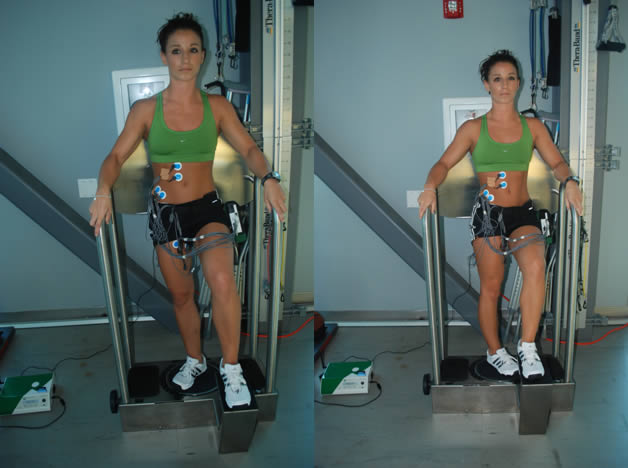 Figure 2. Seated with tubing hip internal and external rotation. 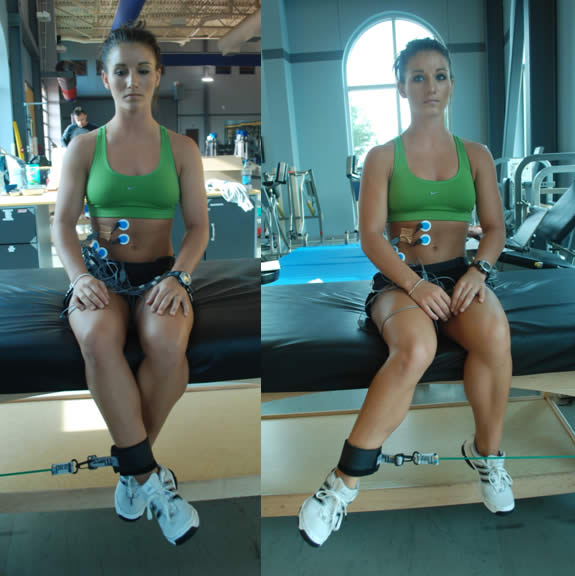 Figure 3. Prone with tubing hip internal and external rotation.
*Rotex, used in this study as the only variant between the Experimental and Control Group, provides a superior platform to train and strengthen the muscles that rotate and stabilize the hips and shoulders. It has proven to be an important component of strength training, targeting both the mechanical and neuromuscular systems. Rotex has been tested and proved to restore range of motion to the hip and shoulder joint, as well as prevent or reduce several athletically induced injuries. It has also been used in the reduction of Lower and Upper Crossed Syndromes with superior results.
|
||||
   |
|||||